Monday, September 2, 2019

My First Novel's Inspirations ~ Part 10 ~ Shoes and Shoe Buckles

Happy Labor Day! I hope you had a great day. I had fun celebrating with my family and I hope you were able to enjoy the day in some way, too. ๐Ÿ˜Š If you are a first time visitor, I'm so glad you decided to visit! I hope you'll come back often. I try to be here every Monday or let you know when I can't, if at all possible. Remember, if you are a newbie or a long time reader, if you haven't subscribed, look over there ๐Ÿ‘‰, push those buttons and follow the instructions. It helps me out on my goal to authorship, more than you know! 

We have reached Part 10 of my series My First Novel's Inpirations. This part should include shoes, accessories and then a conclusion. It may take me an A, B and C to get it done, but we are on the homestretch either way.


Men's Shoes


"For much of the eighteenth century, men's ankles were much admired. Their dark leather shoes with shiny metal buckles highlighted their ankles beneath clinging light colored stockings. The buckles of men's shoes signaled the status of the wearer as well as the importance of the occasion. Buckles could be made simply of steel or brass or encrusted with jewels and engravings. Some men's shoes were colored for special occasions. By mid-century, however, men's ankles were often hidden beneath fashionable jockey boots." 


If you ever wondered if men really did were these types of shoes back in the 18th century, here is your answer. Most of these are pictures from The Met Museum in New York City. They are all British shoes from around the time period of my novel. Not all men wore these types of shoes, though, so let's see some of the other shoes that may have been worn by the men or boy's of the time.


Children's Shoes


"During the eighteenth century shoes and boots were made on straight lasts, or forms that created the soles of shoes, called straights. Without a sole designed specifically for the left or the right foot, shoes were uncomfortable. People frequently switched shoes from one foot to another to reduce the pain. Nevertheless, both men and women were expected to walk smoothly. Children began practicing how to walk properly in shoes from an early age." 


Women's Shoes

"Women wore high-heeled shoes made of colorful silk or delicate leather, sometimes decorated with gold and silver lace and braid. Although women wore heavily decorated silk dresses, their shoes were rarely made from matching material; to do so would be much too expensive. Some shoes were laced, but most had decorative buckles. The toes of women's shoes were pointed or slightly rounded."


Some women did their own embroidery work on their shoes, before sending the material to be used for the making of their shoes. The embroidery work on these shoes is beautiful, whoever did it.


Here is a video about the making of shoes in the 18th century. It's not only about England, but still interesting.


Shoe Buckles
"The decoration of shoes used many techniques: silk embroidery, applied cord passementerie, and silver and gold thread embroidery that was made by professional male embroiderers who belonged to embroidery guilds.
Originally, buckles came into fashion because of their utility. Samuel Pepys refers to putting on buckles for the first time in 1660. By the end of the seventeenth century, buckles overtook the standard of ribbon laces. Both men and women increasingly suffered from buckle mania throughout the eighteenth century. Buckles grew in size and became more elaborate, set with showy paste and semiprecious stones. Men's buckles were larger but both sexes displayed their shoe jewelry during a bow and curtsy with extended foot-the appropriate method of introduction of the day." 


I hope you enjoyed this look into the shoes and buckles of 18th century England. I know I did. I've always been a shoe person and some of these are gorgeous. 


Thanks for coming and I hope you'll join me again next time as we move forward through our series MFNI's. Have a great week and may the Lord God bless your family with faith, hope and love.


In Christ,

Sandy

SUBSCRIBEFOLLOW and LIKE 

SHARE this blog post!
COMMENT below! 
and JOIN me next week!! 


Monday, August 26, 2019

My First Novel's Inspirations ~ Part 9c/Women's Fashions ~ Hairstyles, Wigs and Hats

Welcome and Happy Monday! It's good to be back after my two week break. I'm glad you came back to join me. This series has been fun for me. Going back and re-researching the things that have inspired and influenced my writing has given me an even better understanding of the times. Just as I think I'm almost done with the series, I remember something else I want to tell you about, but I really think I'll be able to wrap it up in another two...or three posts. If you're just joining us, feel free to go back and see what you've missed. As always, don't forget to subscribe ๐Ÿ‘‰ while your here if you haven't already and I hope you'll make it a habit to come back every Monday. I'm here most Monday's, but when I miss I try to give you a heads up.


18th Century
Women's Fashions
Hairstyles, Wigs and Hats


Hairstyles

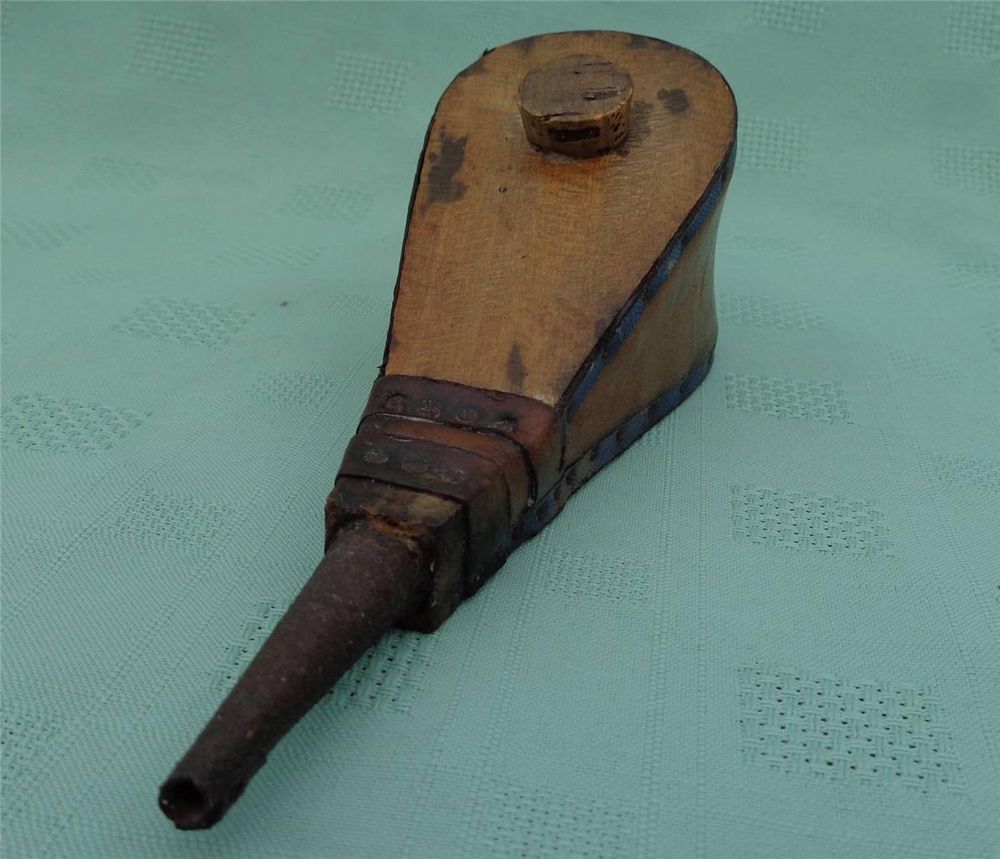
"Ladies and gents alike achieved their fashionable pale hair colour by applying hair powder, which was made from flour or starch and puffed onto the head with a pair of bellows [a device constructed to furnish a strong blast of air]. For that typically Georgian ‘big haired’ look the wealthy employed an army of stylists who built elaborate structures atop their heads around wooden frames padded with extra sections often made from horse hair.


Curling tongs were also developed: these resembled a pair of blunt scissors, with two metal prongs and wooden handles. When the prongs were heated in the fire the hair could then be wrapped around them and held in place until the curl had set. Alternatively, clay rollers were heated in an oven and then applied to the hair or wig." 


Bellows

Curling Tongs

Clay Curlers and Curling Iron

"The eighteenth century was an age of elegance. Never in European history do we see men and women so elaborately artificial, so far removed from natural appearance. What could not be done with the natural hair was made with wigs. This epoch was an extravagant explosion of amazing hairstyles, a reaction completely opposed to the modesty and shyness of former centuries. The hair was in synchrony with the "Rococo" style, which was the most important one until the end of the century. It was an artistic style in which curves "s" shaped predominated, with asymmetries, emphasizing the contrast; a dynamic and brilliant style, where the forms played integrating a harmonious and elegant movement." 


Opinions differ on the use of wigs for women in the 18th century. Some say women didn't begin wearing them until the later part of the century. Others say they only wore them if they were trying to keep vermin out of their hair, or if they couldn't achieve a hairstyle they wanted with the hairstyling tools of the day. The paintings of early to mid 18th century, would suggest that wigs were worn early in the century, at least by some women and later in the century. Historians seem to agree that the wig began going out of style by the end of the century. When exactly wigs were worn by women is unclear (at least to me), but they were a part of 18th century fashion, even more for men than women. Women did wear them, though and so I'll share some of those styles with you. 


Hats, Bonnets, Mob Caps...

"In the middle to late 18th century in England during the Georgian Period, married women wore head coverings called mob caps. These cloth coverings were made from linen, fit closely to the face, tied with a bow, and were open in the back to make room for pinned-up hair. They protected tresses from grime and were more convenient to wash than the hair itself. Worn only indoors, they were covered by structured bonnets when women went out in public." 


"Straw hats were frequently worn in the mid-1700s and became immensely popular in the late 1700s. Women wore straw hats outside to shield themselves from the sun. The hats often had a flat brim and a ribbon. Straw hats were usually worn by women in the country and on farms, but they became more popular among city women in the 1700s. Hats were occasionally worn over caps.

Women of all social classes wore caps. Short of events requiring formal dress, caps were worn by 18th century women on a regular basis. Caps were generally white and made from linen. They were worn to promote cleanliness while being fashionable."


"The donning of the English bonnet, or ‘Bonnet du Jour’, did not depend upon a woman’s class; rather, it was enjoyed by everyone from milkmaids to maidens. The large brim framed the woman’s face but protected her profile from unwanted onlookers and lecherous men. The classic bonnet can often be seen in period works such as Jane Austen’s Pride and Prejudice." 


I enjoyed the research for this subject, even though there are discrepancies in some of the data I found. In any case, I think I gave you a better idea of how an 18th century woman may have styled her hair or tried to and what types of head ware they may have worn. I didn't get into the fancier hats that would have been worn by the wealthy who attended court or more formal occasions, since that wasn't needed for my story. I also didn't show you some of the more outrageous hats. Many of those were inspired by Marie Antoinette, who hadn't yet been born in my time period. It's good for a laugh, though if you want to look it up yourself. ๐Ÿ˜€


If you were here last time, you probably expected to learn about shoes this time, but I just couldn't fit it in. Hopefully next time we'll get to look at the shoes of the day. If you are enjoying this series, I'd love to hear from you. Leave a comment and let me know if you've had a favorite part so far. Don't forget to subscribe and come again. I'm so grateful for my followers and I hope you'll join my tribe.

According to the Urban Dictionary:

" Tribe- A group of friends that becomes your family.
The people that will be there for you no matter what and who you're guaranteed to have a good time with."

Thanks for coming! May the Lord God bless you and your family with faith, hope and love, in Jesus' Name amen.

In Christ,
Sandy


SUBSCRIBEFOLLOW and LIKE 

SHARE this blog post!
COMMENT below! 
and JOIN me next week!! 


Monday, August 5, 2019

My First Novel's Inspirations ~ Part 9b ~ Women's Fashions

Hello! I'm glad you could make it for another post. If this is your first time to visit, I'm glad you came and I hope you will make my blog a regular place to visit. If you haven't yet subscribed, please consider following and subscribing. Look over there ๐Ÿ‘‰ and press the buttons and follow the instructions, easy peasy!

If you've been here through this whole series , I hope you've been enjoying the look into my life as a writer and the effort that goes into the research process. As I mentioned before, I learn about way more things through my research than I'm able to put in my writing. There just isn't enough room to put it all in, but it does influence what I'm writing. I think any research I do as a writer, if not used in this novel, may be used in another and isn't a vain effort.

Let's Talk Style

"This era is defined as late Baroque/Rococo style. The new fashion trends introduced during this era had a greater impact on society, affecting not only royalty and aristocrats, but also middle and even lower classes. Clothing during this time can be characterized by soft pastels, light, airy, and asymmetrical designs, and playful styles. Wigs remained essential for men and women of substance, and were often white; natural hair was powdered to achieve the fashionable look.

Distinction was made in this period between full dress worn at court and for formal occasions, and undress or everyday, daytime clothes. As the decades progressed, fewer and fewer occasions called for full dress, which had all but disappeared by the end of the century.

Fashion designers became more recognizable during this period, as men and women were eager to be dressed in the latest trends and styles. Fashion magazines emerged during this era, originally aimed at intelligent readers, but quickly capturing the attention of lower classes with their colorful illustrations and up-to-date fashion news." 


"During this period, a new silhouette for women was developing.  Panniers, or wide hoops worn under the skirt that extended sideways, became a staple.  Extremely wide panniers were worn to formal occasions, while smaller ones were worn in everyday settings.  Waists were tightly constricted by corsets, provided contrasts to the wide skirts.  Plunging necklines also became common.  Skirts usually opened at the front, displaying an underskirt or petticoat." 


"Aristocratic women's fashions of the 18th century were greatly influenced by the Rococo mentality. While Baroque clothing had been stiff and formal, Rococo women began adapting looser dresses and skirts. Since so much of aristocratic life now centered on private estates rather than the formal court, women began publically wearing the sort of clothes that had previously only been worn in private."   


As with anything in life, people can take an idea and run with it to the extreme. The above two dresses are a good example of that. They took two dresses that could have been beautiful and turned them into a ridiculous extreme of a fashion idea.


The above three pictures, show a more reasonable use of the Baroque/Rococo styles.

Middle and Lower Class Style

There are things that the middle and lower classes of the Georgian Era would have been hard pressed to do when it came to wearing the styles of the day. They would have been more limited in what fabrics they could afford. They wouldn't have the help of a lady's maid and they would have needed to wear things they could work in. The lower class woman especially, would not have the means to hire a servant to work for her. The middle class might be able to afford some servants, but not to the extent that she could wear silks and gauze sipping tea and entertaining guests, with no worry of getting dust on her clothing. 

Here is a video showing what and how a lower class woman would have dressed like in the 18th century. (G-Rated). If you missed the video of the upper class woman, you can find it here.


apron- A woman's apron was generally a rectangle gathered to a narrow tape or a narrow self-fabric band, with apron strings of tape, sometimes tying in back but often long enough to wrap around the back and tie in front. 

bed gown- less frequently spelled bed-gown and bedgown A woman's informal, loose-fitting, typically thigh-length garment, with sleeves and skirts cut in one with the body, side seams at the natural side, pleated or shaped fullness at the hip, a pleat or two at center back usually held in place only at the neck, and often a V-neckline in front. 

fichu-French word for a handkerchief.


gown- A full length, sleeved garment with a fitted bodice and skirts; the bodice and skirts may be cut in one, cut separately, or cut in one in some places and separate elsewhere, depending on the particular style. Women's gowns were cut in two basic variations: the English gown (night gown, robe ร  l'anglaise) and the sack gown (negligee, sacque, robe ร  la franรงaise)."


Thanks again for joining me this week as we looked at some of the styles of the times in Georgian Era England. The next two Mondays I will be unable to blog, so please make note that I plan to be back with the next installment of this series on August 26th. I hope to talk then about wigs, hats and shoes. 

May the Lord Jesus bless you and your family with faith, hope and love.


In Christ,

Sandy

SUBSCRIBEFOLLOW and LIKE 

SHARE this blog post!
COMMENT below! 
and JOIN me next week!! 


Monday, July 29, 2019

My First Novel's Inspirations ~ Part 9a ~ Women's Fashion

Monday, Monday...here we are again. Thanks for spending part of it with me. If you're reading this on any other day, no problem, I'm just glad you came. While you're here, head over there ๐Ÿ‘‰ and subscribe if you haven't already. It would make my day, to hear my phone ding alerting me that I have a new subscriber. It's music to my ears! ๐ŸŽถ๐Ÿ‘‚๐ŸŽถ 

Last week I introduced another part of my series, My First Novel's Inspirations, Introduction to Women's Fashion. I tried to give you a taste of the depth of this subject. This will by no means give you a complete picture of fashion for women in 18th century England. For one thing, my research focused on the Georgian Era. Another is that research can be pretty much unending, and I have to say, enough already, at some point, if I'm ever going to take what I've learned and get my writing done. 

Just as today, women wore the best fabrics they could afford. Just like today, not every fabric is created equally. Not every cotton is going to feel the same. Not every wool will feel the same. If you want a well made, quality fabric, you will have to pay the price and so did the women in the Georgian Era.


As I studied these fabrics and saw the amazing talents of the ones using these fabrics to make these lovely clothes, I can only think of how Good the Lord is for gifting people with these skills. I am thankful for the beauty we have in this world. I thank the Lord Jesus for the blessing of it. May He receive the glory for it.


Fabrics Common in the Georgian Era


"The frills of her shift show at the neck, veiled in a muslin ‘kerchief’ and at the opening of her wing-like cuffs, which are typical of the 1750’s. She wears a round muslin cap, the central pleat recalling the ‘fontange’ (1690 – 1710). For formal dress she would wear richly brocaded or embroidered silks."


"Muslin, also mousseline or Malmal, is a cotton fabric of plain weave. It is made in a wide range of weights from delicate sheers to coarse sheeting. Muslins were imported into Europe from the Bengal region, in the eastern part of the Indian subcontinent, during much of the 17th and 18th centuries and were later manufactured in Scotland and England." 


Dress made of Bengal muslin. 
(This painting is housed in the National Maritime Museum of London.)
"Silk, animal fibre produced by certain insects and arachnids as building material for cocoons and webs, some of which can be used to make fine fabrics. In commercial use, silk is almost entirely limited to filaments from the cocoons of domesticated silkworms" 


Silk Embroidered Sack Dress
"A new style of gown called the chemise gown which was made of thin, flowing cotton usually of white or pastel in color came into the Georgian Fashion. This style was inspired by the European countryside clothing and writings from authors like Rousseau." 


"cotton noun: a soft, white material that grows on the seeds of a tall plant and that is used to make cloth" 


Cotton Chemise

"The early English gowns were slightly different from the French gowns. They were fuller in the skirt width and materials like sheer cotton fabrics like muslin, gauze and percale were popular English gown materials." 


"Gauze: thin transparent fabrics of silk, linen or cotton." 

Gauze Fichu

"Calico fabric is a plain-woven textile, made from half-processed and unbleached cotton fibres. It’s a coarse and rough fabric, but not as sturdy as denim or canvas for example, nor as fine as Muslin. Calico is generally very cheap due to it’s unfinished nature, and the fact that it remains un-dyed and raw.

Calico is woven from cotton fibres, and being made from cotton crops it’s completely natural. Because of its unfinished state, there are often flecks of cotton seeds visible in the fabric and it tends to have a cream or grey tinged finish, making it the perfect base to be dyed or printed on." 


Calico Jacket and Petticoat
 "Linen and wool were the most commonly used fabrics. Silk was used for more expensive garments. Cotton was used more than once thought, however, it was somewhat more costly and less available than linen and wool. Fustian, a blend of linen and cotton was popular. Another popular fabric was linsey-woolsey, a woven fabric with a linen warp and woolen weft" 

"Wool is a natural fibre produced by sheep. Sheep grow wool on their bodies in the same way people grow hair. As wool grows out from the sheep’s skin, it forms groups of wavy fibres called staples. This natural crimp (wave) gives wool its
elasticity (springiness)." 

Women's Riding Jacket
"Linen is a textile made from the fibers of the flax plant. Linen is laborious to manufacture, but the fiber is very strong, absorbent and dries faster than cotton. Garments made of linen are valued for their exceptional coolness and freshness in hot and humid weather." 


Linen Embroidered Waistcoat

"Lace developed from the embroidery technique of cutwork, whereby a design is cut out of a woven cloth and the edges are secured with thread to stabilize the voided design and to provide further decorative texture.

Fashions in lace changed markedly during the seventeenth and eighteenth centuries, from simple geometric edgings of the early seventeenth century, to the Baroque three-dimensional needle lace of the second half of the seventeenth century, to the airy decorated net of the late eighteenth century. " 


"lace 
nouna fine open fabric, typically one of cotton or silk, made by looping, twisting, or knitting thread in patterns and used especially for trimming garments." 


White muslin gown trimmed with wide lace cuffs and collar.

With that beautiful picture, I'll say goodbye for today. I hope to be back next Monday with more about women's fashion in the Georgian Era. Please come again and again and again. I'm here most every Monday. Have a great week and may The Lord God bless you and your family with Faith, Hope and Love. If you ever have questions or comments feel free to share. I love to hear from my readers.

In Christ,

Sandy

SUBSCRIBEFOLLOW and LIKE 

SHARE this blog post!
COMMENT below! 
and JOIN me next week!!